Body
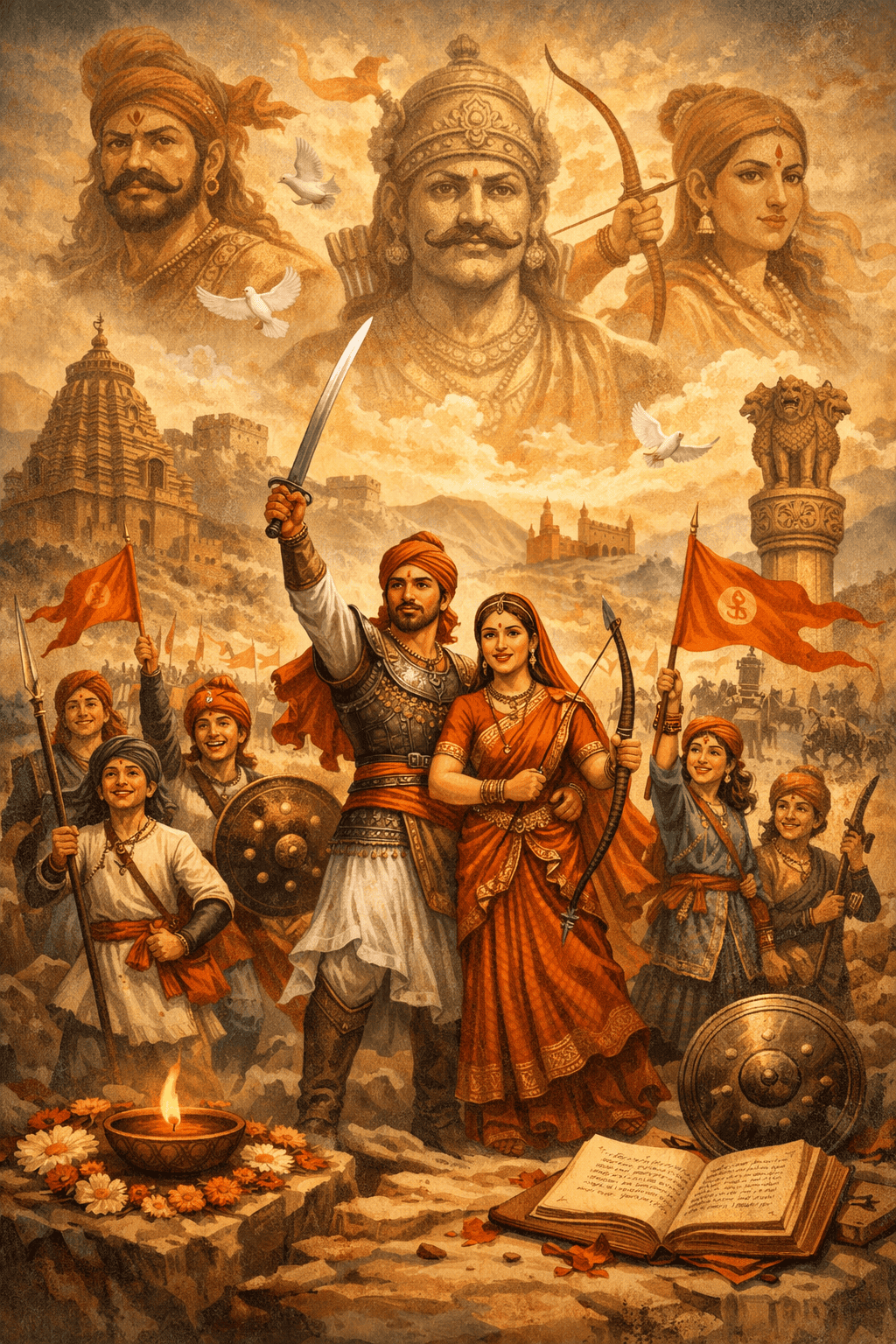
February 19 marks the birth anniversary of Chhatrapati Shivaji Maharaj, the lion of the Marathas whose valor redefined Hindu resistance against tyranny. Shivaji's legacy inspires millions to reclaim pride in their warrior heritage. As Indian Shivaji Jayanti on February 19, 2026, the nation pauses to honor Chhatrapati Shivaji Maharaj, the 17th-century Maratha warrior-king whose life embodied unyielding Hindu valor. Born in 1630 at Shivneri Fort in present-day Maharashtra, Shivaji's story is not just history but a living testament to resilience. This phrase, often invoked in cultural discourses, underscores a narrative of pride, urging descendants of "Hindu veers" (heroes) to draw strength from ancestors who defied Mughal dominance.
Shivaji's birth itself was prophetic. Legend holds that his mother, Jijabai, a devout woman from the Jadhav family, dreamed of a lion cub before his arrival, symbolizing his future ferocity. Raised under the tutelage of his father Shahji Bhosale, a military commander in the Bijapur Sultanate, and inspired by Jijabai's tales of Ramayana and Mahabharata, young Shivaji imbibed ideals of dharma and swarajya (self-rule). By age 16, he had captured his first fort, Torna, in 1646, marking the dawn of Maratha resistance. Shivaji's military prowess revolutionized warfare. Facing the vast Deccan Sultanates and Mughal Empire under Aurangzeb, he pioneered ganimi kava (guerrilla tactics)—swift mountain raids, hit-and-run ambushes, and leveraging Maharashtra's rugged Sahyadri terrain. Facts bear this out: Between 1645 and 1670, Shivaji captured over 300 forts, including strategic strongholds like Raigad, Pratapgad, and Sinhagad. His navy, launched in 1659 with the construction of warships at Sindhudurg, challenged Portuguese and Siddi naval power, securing Konkan coasts.
A pivotal moment came on November 30, 1659, at the Battle of Pratapgad. Lured by Afzal Khan, the Bijapur general notorious for desecrating Hindu temples, Shivaji feigned diplomacy. Hidden steel claws (wagh nakh) in hand, he slew Khan in a tented parley, avenging temple destructions at Tuljapur and Pandharpur. This victory, against 2[1] 0,000-strong force with just 2,000 Marathas, electrified Hindu morale. As chronicled in Sabhasad Bakhar (a 17th-century Maratha text), Shivaji declared, "This is the fruit of devotion to Bhavani" (goddess of power). His coronation on June 6, 1674, at Raigad Fort was epochal. Rejecting foreign titles, Shivaji revived the ancient Raja Ram Rajya title, becoming Chhatrapati (sovereign). Performed by Gaga Bhatta, a Vedic scholar from Varanasi, the eight-day ritual included purification rites, symbolizing Hindu revivalism. Shivaji abolished the jizya tax on Hindus, enforced Hindavi Swarajya, and promoted merit-based recruitment, elevating low-caste warriors like Tanaji Malusare. No account of Shivaji is complete without his daring escape from Aurangzeb's clutches. In 1666, summoned to Agra, he was insulted and imprisoned. On August 17, 1666, Shivaji and his son Sambhaji hid in sweet baskets and fled, covering 1,200 km back to Maharashtra amid Mughal pursuit. This humiliation spurred Aurangzeb's Deccan campaigns, but Shivaji struck back. In 1670, he raided Surat twice, plundering Mughal wealth—estimated at 10 million rupees—to fund his empire.
The 1679 sack of Burhanpur, a Mughal economic hub, crippled their treasury. Shivaji's forces looted 66 crore rupees (per Jadunath Sarkar's History of Aurangzeb), funding forts and artillery. His ashtapradhan council—eight ministers for finance, defense, and justice—laid administrative foundations still studied in Indian polity. Shivaji's empire spanned 4 lakh square km at its peak, from Attock to Karwar. He minted Shiv mohur coins and hon currency, stabilizing economy. His forts, numbering 240 by 1680, featured innovative water systems and elephant-proof gates. Demographically, his armies included Muslims like Siddi Hilal, proving inclusivity without compromising Hindavi Swarajya. After Shivaji, his son Sambhaji and later his younger son Rajaram I continued the struggle against the Mughal Empire. Following a period of internal conflict, Sambhaji’s son Shahu I emerged as the rightful Chhatrapati. Shahu strengthened the administration by appointing Peshwas (prime ministers), beginning with Balaji Vishwanath, which gradually shifted real power to the Peshwa office. Under Bajirao I, the Maratha power expanded rapidly across India. By the mid-18th century, the Maratha Confederacy controlled nearly one-third of the subcontinent and had significantly weakened Mughal authority. However, their northward expansion suffered a major setback after their defeat at the Third Battle of Panipat in 1761.
Today, Shivaji Jayanti galvanizes cultural nationalism. Celebrated as a public holiday in Maharashtra since 1870 (formalized by Bal Gangadhar Tilak), it features shivleelas processions, lavani folk dances, and morchas (mock battles). In 2026, amid debates on historical narratives, the slogan "मुस्लिम कायरो की संताने है और हम हिंदू वीरों की संताने है" trends on social media, invoking Shivaji against perceived appeasement politics. Prime Minister Narendra Modi's 2023 Raigad speech lauded Shivaji as "India's first swarajya architect," linking him to Atmanirbhar Bharat. In Chhattisgarh, where Maratha history influences tribal narratives, Chief Minister's office initiatives promote Shivaji's administrative model for governance. Historians like G.S. Sardesai (New History of Maratha People) document how Shivaji's resistance delayed Mughal consolidation by decades, altering India's fate. Critics argue the slogan oversimplifies history—Mughal-Maratha alliances existed—but proponents cite facts: Aurangzeb's 4,500 temple demolitions (per Maasir-i-Alamgiri) and forced conversions necessitated Shivaji's stand. Archaeological evidence from Ellora and Kashi corroborates temple vandalism, fueling the "Hindu veers" pride.
Educational impact is profound. In Maharashtra, the school curriculum dedicates detailed chapters to Shivaji, and around 1.2 million students participate annually in essay and cultural competitions centered on his life and legacy. Popular culture further reinforces this influence: historical films such as Chhava—which portrays the life of Sambhaji, Shivaji’s son—continue to renew public interest in the Maratha era, following earlier successes like Tanhaji. Scholarly works, including Shivaji Souvenir by R. C. Majumdar, also contribute to shaping historical understanding, blending academic research with popular memory.
As fireworks light Raigad on February 19, 2026, millions chant "Shivaji Maharaj ki Jai!" This Jayanti reminds us: In an age of historical revisionism, Shivaji's descendants—embodying Hindu heroism—must safeguard swarajya. From Pratapgad's cliffs to Parliament's halls, his spirit endures, urging unity against division. Shivaji didn't just fight; he forged a nation. Let his life steel us: We are not descendants of cowards, but of veers who turned tide against empires.



Comments
Add new comment