Body
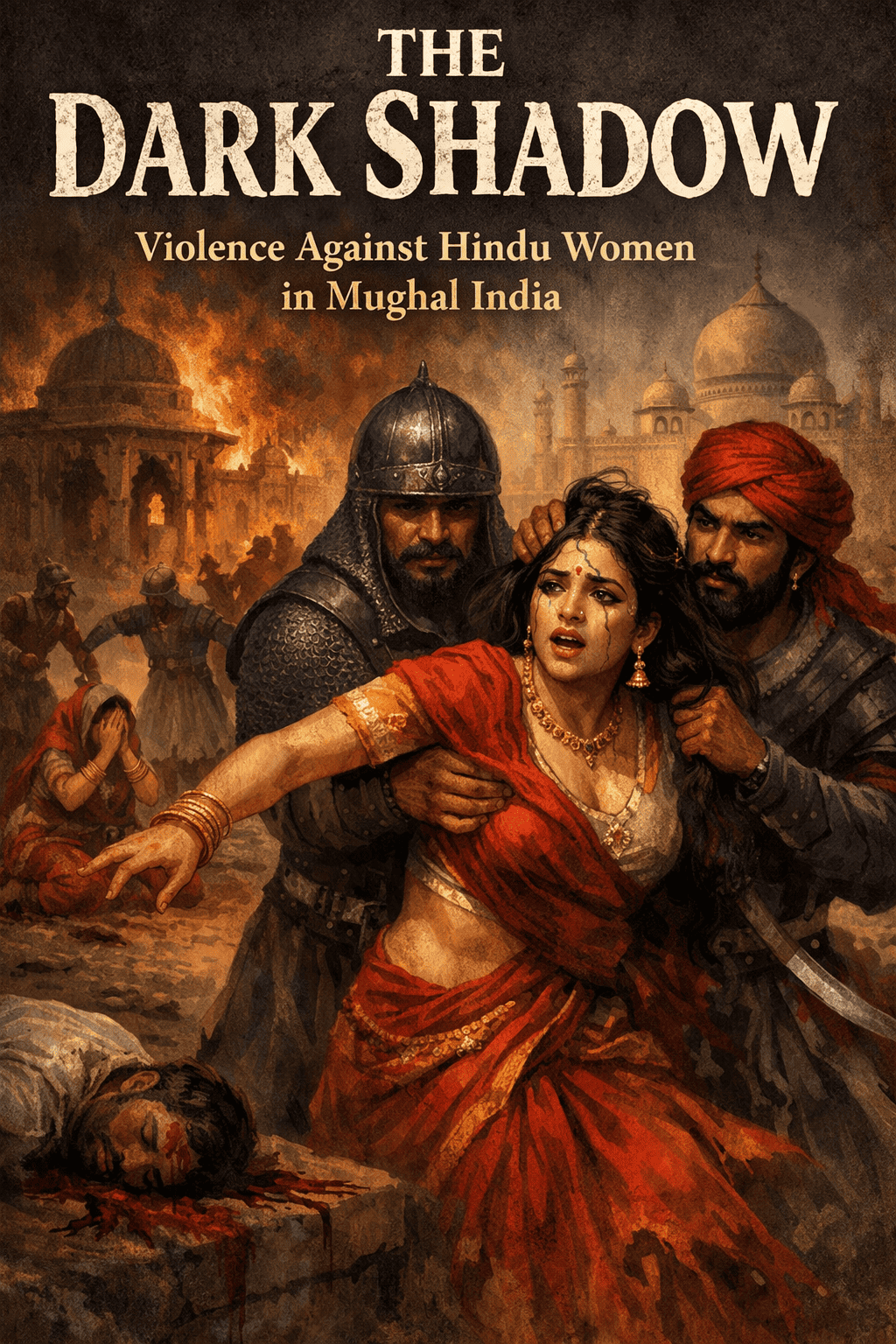
The Mughal era in India, spanning from the 16th to the 19th century, is often romanticized for its architectural grandeur and cultural synthesis, but a critical examination reveals a grim underbelly of systemic violence, particularly against Hindu women. Historical accounts from biographical dictionaries and chronicles document abductions, forced conversions, rapes, and enslavement as tools of power assertion and religious dominance, disproportionately targeting Hindu communities. Hindu women were frequently abducted by Mughal nobles to extract tribute or assert dominance, treating their bodies as bargaining chips in political conflicts. For instance, during Shah Jahan's reign, Mahabat Khan captured the wife of Maratha rebel Gheloji Bhonsle and demanded 100,000 hons as ransom, releasing her only after payment, highlighting how women's honor was commodified. Similarly, Murshid Quli Khan, faujdar of Mathura under Jahangir, forcefully took a Hindu woman from Govardhannagar, a restricted Muslim-entry area, with no accountability or intervention, normalizing such crimes.
These acts extended to elite circles; Mirza Lahori, son of Lahore's governor, abducted "infidel brides by force and violence," and complaints to his father were dismissed as forging kinship bonds. Maasir-ul-Umara notes his later release despite imprisonment, underscoring impunity for the powerful. Such incidents eroded Hindu social structures, fostering fear and seclusion among women. Sexual violence was a deliberate strategy to terrorize and subjugate Hindu populations, with women sold as slaves or integrated into harems after conversion. Chronicles like Zakhirat-ul-Khwanin describe nobles like Nawwab Mirza Ghazi Beg Tarkhan employing agents to supply 11-12-year-old virgin girls nightly, discarding them post-use, reflecting dehumanization. Mughal harems swelled with abducted Hindu women; Shah Jahan inherited 8,000 from Jahangir and expanded it by raiding Hindu families. Under Aurangzeb, policies intensified: temple destructions in places like Mathura symbolized cultural erasure, often accompanied by violence against women guarding sacred sites. Forced conversions preceded marriages; Turkish sultans and Mughals compelled Hindu chiefs to surrender daughters, first converting them to Islam. Ibn Battuta's accounts from earlier Delhi Sultanate eras, echoed in Mughal times, detail festivals where enslaved Hindu girls were distributed for marriage or concubinage.
Aurangzeb's reign marked peak orthodoxy, with orders to destroy "idolatrous" temples and halt Hindu practices, leading to widespread persecution. His governors enforced jizya harshly on Hindus, exacerbating vulnerability of women to enslavement during rebellions. Jahangir and Shah Jahan continued predatory traditions; Jahangir's faujdar in Mathura exemplified routine abductions, while Shah Jahan's harem raids deepened Hindu societal retreat into child marriages and purdah to shield women. Akbar's era offered superficial tolerance, but even he overlooked noble crimes; a peasant's daughter was avenged when violated by a commoner, but noble Muhammad Sharif faced mere censure. This class-gender nexus amplified Hindu women's plight, as lower-caste victims received no justice. Faced with inevitable capture, Hindu women resorted to jauhar—mass self-immolation—to preserve honor, a direct response to Mughal invaders' enslavement practices. Rajput women performed jauhar repeatedly; invaders extracted half-burnt survivors, healed them, then raped and sold them. Sati, while rooted in Hindu tradition, surged under Mughal pressure; after Raja Man Singh's death, 60 persons including women self-immolated, and Raja Ram Das Kachhwaha saw 15 wives and 20 servants follow suit.
Not all were voluntary; nobles like Aqil Khan massacred their harems to prevent enemy capture, forcing women into death. Rani Durgavati, defeated by Asaf Khan, begged her confidant to kill her rather than face dishonor. Rupmati, consort of Malwa's Baz Bahadur, poisoned herself upon his defeat to evade Mughal forces. These tragedies underscore how violence permeated all levels, turning women's bodies into "war zones. Mughal violence catalyzed regressive Hindu norms: child marriage, veiling, widow degradation, and educational denial emerged to counter enslavement threats. Patriarchal controls tightened, reducing women from ancient Bharat's empowered status—seen in matrilineal tribes—to mere guardians of family honor. Domestic violence persisted across faiths, justified by Sharia and Dharmashastra, but inter-community atrocities targeted Hindu women systematically. Literary sources glorify Mughals, yet biographical texts like Zakhirat-ul-Khwanin reveal normalized brutality: women sealed in harems, labeled "low in intellect," or fetishized. Cross-dressing warrior women fought but were demeaned, their bravery uncelebrated.
This era's violence wasn't incidental but structural, using women's degradation for demographic and cultural conquest. While Mughals integrated some Hindus, core Hindu women's suffering—abductions, rapes, forced conversions—demands unflinching critique amid hagiographic narratives. Understanding this history illuminates India's socio-religious fault lines, urging nuanced reckoning with the past.




Comments
Add new comment