Body
Introduction
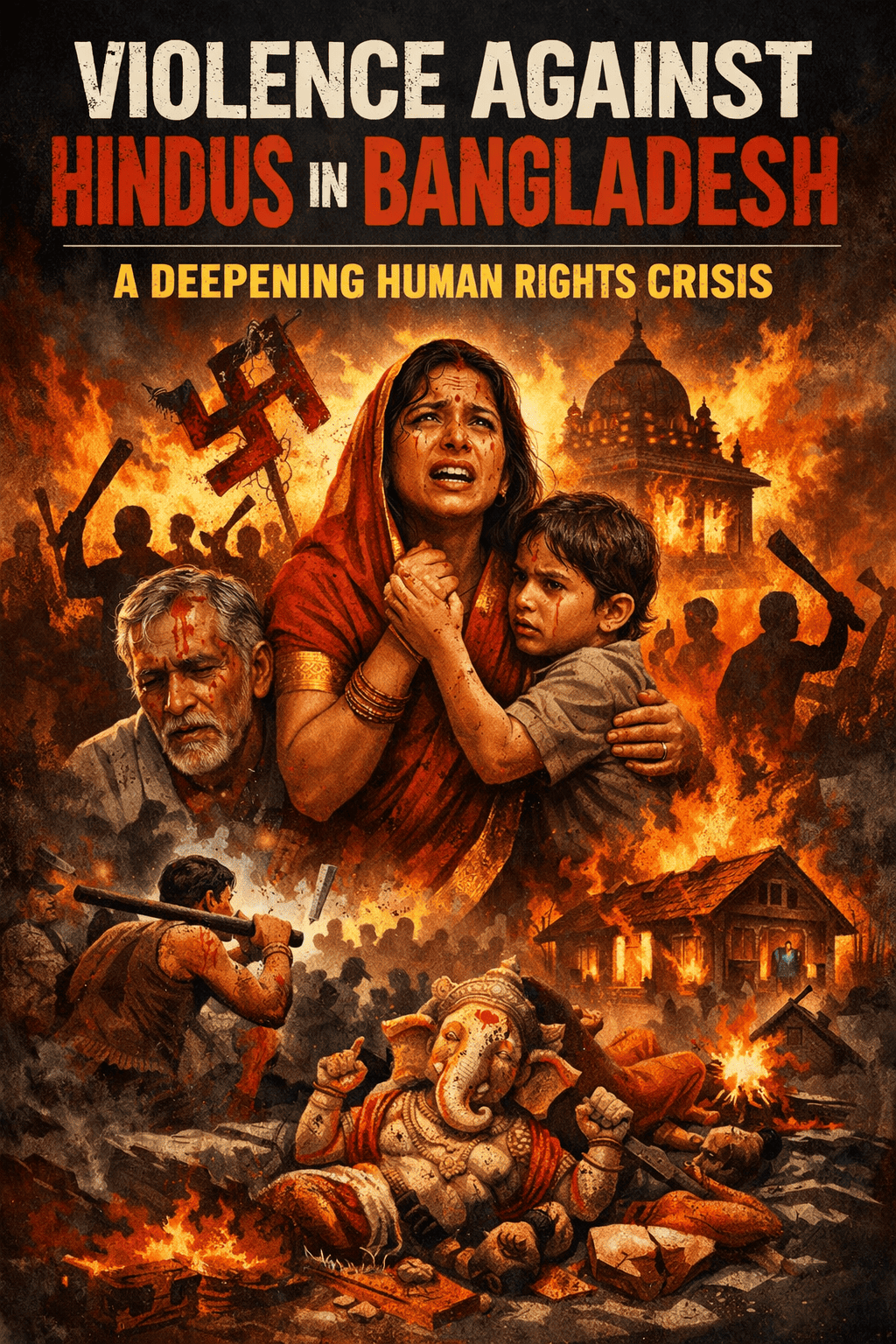
Bangladesh, founded on ideals of linguistic nationalism and secularism, is currently witnessing one of the most alarming minority crises in South Asia. In recent years, violence against Hindus—Bangladesh’s largest religious minority—has escalated sharply. The events following the political upheaval of 2024 have exposed long-standing vulnerabilities, turning sporadic discrimination into widespread fear, displacement, and bloodshed. This crisis is not only a domestic human rights issue but also a matter of regional and international concern. In the wake of Sheikh Hasina's ouster in August 2024, Bangladesh has witnessed a alarming surge in violence against its Hindu minority, culminating in a particularly brutal wave of incidents in December 2025 that claimed at least four lives and displaced dozens. On December 18, 27-year-old Dipu Chandra Das was lynched by a mob in Mymensingh's Bhaluka upazila over blasphemy allegations, his body tied to a tree and set ablaze, prompting 12 arrests by authorities. Just days later, on December 24, Hindu youth Amrit Mondal was beaten to death in the same district amid extortion claims, while in Rangpur, elderly freedom fighter Jogesh Chandra Roy, 75, and his wife Surbana, 60, were brutally murdered in their home. The violence peaked with the shooting of garment worker Bajendra Biswas on December 29 in Mymensingh, allegedly by a colleague, and arson attacks on Hindu homes in Pirojpur and Chattogram that forced families to flee through makeshift escapes. Amid reports of over 2,900 attacks on minorities since the regime change, including 71 blasphemy-linked assaults in six months.
Political Upheaval and Breakdown of Order
The overthrow of Prime Minister Sheikh Hasina in August 2024 marked a decisive turning point. Her sudden exit created a governance vacuum that extremist groups were quick to exploit. Within weeks, reports emerged of coordinated attacks on Hindu homes, shops, and temples across multiple districts. According to documented findings, more than two thousand incidents of violence occurred in less than a month, revealing the scale and organisation behind the attacks. For ordinary Hindu families, political instability translated directly into physical danger.
Targeting of Hindu Religious and Social Leadership
A significant escalation occurred with the arrest of Chinmoy Krishna Das, a Hindu monk and social activist who had been advocating peaceful constitutional protections for minorities. Charged with sedition, his arrest triggered protests and intensified communal tensions. The subsequent freezing of bank accounts linked to Hindu religious organizations and the detention of additional priests reinforced fears that the state was increasingly hostile—or at least indifferent—to Hindu concerns. These actions discouraged community leadership at a time when protection and dialogue were most needed.
Mob Violence and the Lynching of Dipu Chandra Das
The lynching of Dipu Chandra Das in December 2024 became a symbol of the crisis. A young garment factory worker and sole breadwinner for his family, Dipu was falsely accused of blasphemy, dragged from his residence, and beaten to death by a mob. Videos of his killing circulated widely on social media, exposing the brutality of mob justice. Reports suggesting that police custody failed to protect him further damaged public trust in law enforcement and raised serious questions about institutional accountability.
Pranav Ankush Jadhav
2nd Year, BALLB Student
ILS LAW COLLEGE, PUNE


Comments
Add new comment