Body
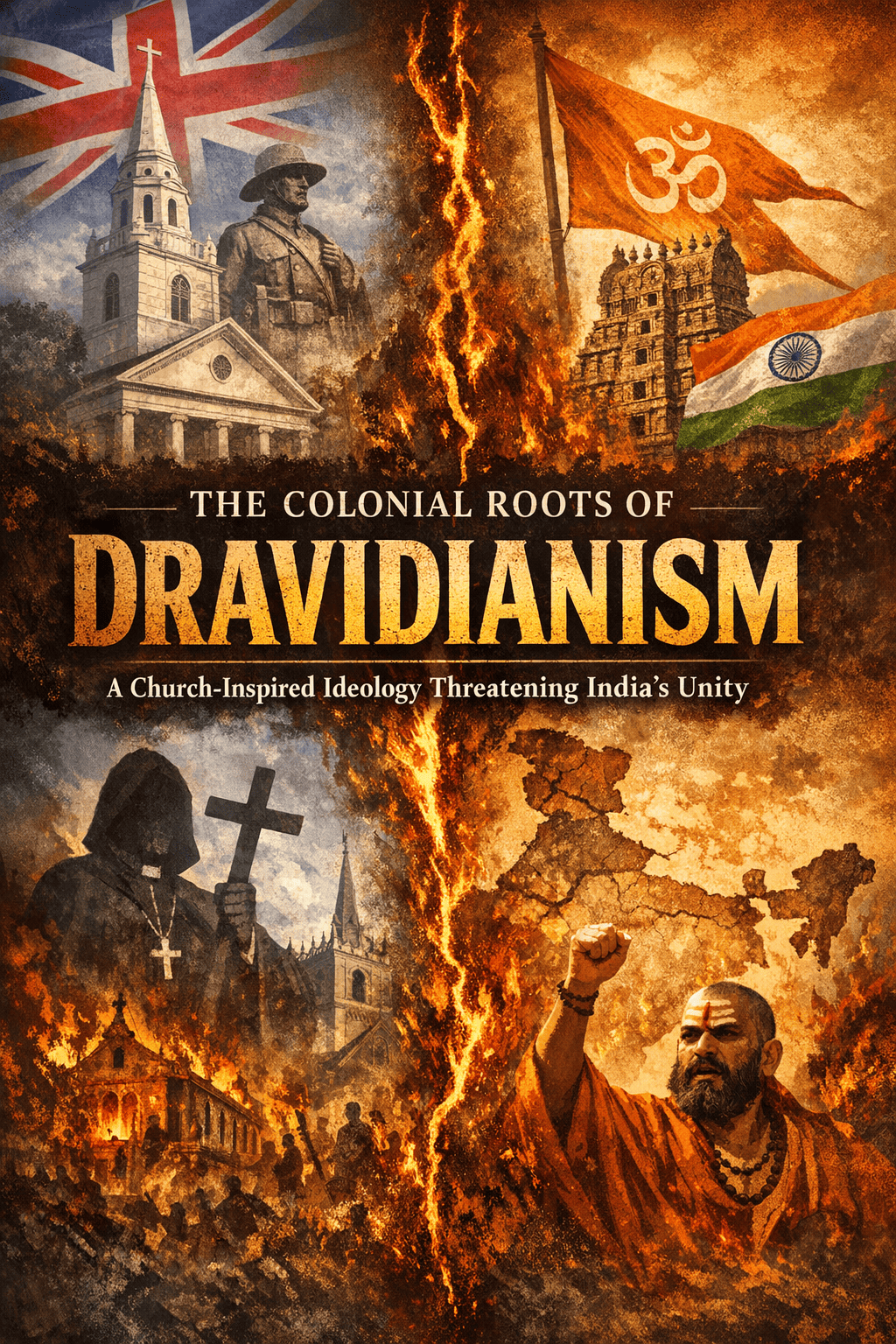
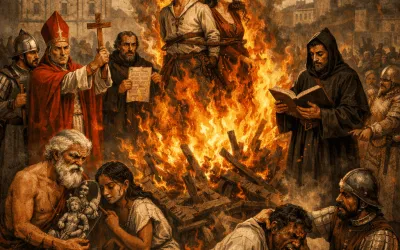
In an era where India's national consciousness is resurging, a lingering ideological shadow continues to cast doubt on the country's cultural cohesion. Dravidianism, often portrayed as a regional pride movement, is in reality a colonial construct engineered by British officials and Christian missionaries to dismantle India's unified Hindu heritage. This fabricated divide, pitting "Aryans" against "Dravidians," has not only fueled linguistic and ethnic tensions but also served as a tool for religious conversion and political fragmentation. As recent statements from Tamil Nadu leaders echo this divisive rhetoric, it's imperative to unmask Dravidianism's origins and its ongoing assault on Sanatana Dharma, treating its confrontation as a national priority for preserving social harmony and religious identity. For over five centuries, European powers—driven by religious expansionism—have schemed to erode India's pluralistic society. From the Portuguese inquisitions to British colonial policies, the goal has been consistent: divide and conquer. The Aryan-Dravidian binary, invented through manipulated linguistics and ethnography, exemplifies this strategy. By artificially severing South Indian languages from Sanskrit roots and rebranding them as "Dravidian," colonial actors created a narrative of oppression, portraying North Indians as invading "Aryans" and South Indians as subjugated "Dravidians." This not only justified British rule but also paved the way for Christian missionaries to position their faith as a liberator from "Hindu tyranny."
The Fabrication of the Dravidian Linguistic Family
The seeds of this division were sown in the early 19th century under British colonial administration. Francis Whyte Ellis, a British collector in Madras, was among the first to propose that South Indian languages formed an independent family, distinct from Sanskrit-influenced Indo-Aryan tongues. In 1816, Ellis contributed a pivotal "Note to the Introduction" in Alexander D. Campbell's Grammar of the Teloogoo Language, arguing that Tamil, Telugu, Kannada, and Malayalam shared a non-Sanskritic ancestor. This was no mere academic exercise; it was a deliberate attempt to isolate South Indians from the broader Vedic tradition, making them more amenable to colonial and missionary influences. Campbell, as superintendent of Fort St. George College, reinforced this by composing grammars that emphasized the supposed autonomy of these languages. His work claimed that while most Indian languages derived from Sanskrit, the southern ones did not, thereby crafting a cultural chasm. These efforts were part of a larger colonial toolkit, where linguistics became a weapon to dismantle indigenous identities and align them with Western frameworks. As scholars note, such classifications were rooted in racial anthropology, linking "Dravidians" to darker-skinned, "inferior" groups subjugated by lighter-skinned "Aryans"—a narrative that echoed European racial hierarchies.
Enter Robert Caldwell, the Anglican missionary whose 1856 book, A Comparative Grammar of the Dravidian or South Indian Family of Languages, formalized this divide. Arriving in Madras in 1838 as a London Missionary Society envoy, Caldwell mastered Tamil to proselytize the masses. He coined "Dravidian" from the Sanskrit term "Dravida," but twisted it to sever ties with Sanskrit, even attempting to link it to Hebrew for biblical legitimacy. Caldwell's work wasn't scholarly neutrality; it was evangelism disguised as linguistics. By depicting Vedic Hinduism as an "Aryan imposition" on indigenous Dravidians, he provided a moral pretext for conversions, targeting lower castes with promises of equality under Christianity. Caldwell's influence extended beyond academia. As a bishop, he built churches and schools in Tamil Nadu, using his linguistic theories to erode Sanatana roots. Historians describe his strategies as representational tactics that portrayed Dravidians as a "savage race" needing Christian salvation, fueling social disruptions like caste conflicts and anti-Brahmin movements.
The Dravidian Movement: A Ticking Ideological Time Bomb
This colonial groundwork birthed the Dravidian movement, often hailed as a social justice crusade but critiqued as a "time bomb" against Hindu unity. In the words of a Madurai archbishop in the 1950s, it was a Church-orchestrated tool to dismantle Dharma in Tamil Nadu. The movement gained traction through figures like E.V. Ramasamy (Periyar), who amplified anti-Brahminism, and C.N. Annadurai, who politicized it via the Dravida Munnetra Kazhagam (DMK) in 1949. Rooted in anti-Aryan, anti-Congress sentiments, it once demanded a separate "Dravidastan," echoing colonial separatist agendas. The ideology's explosive potential lies in its attack on collective consciousness. Unlike physical weapons, it erodes national identity by fostering North-South, Brahmin-non-Brahmin divides. Max Müller, another colonial scholar, complemented this by mistranslating Vedas to portray Hinduism as regressive, further alienating South Indians from their heritage.
Dravidian Politics: Entwined with Church Agendas
In Tamil Nadu, this legacy manifests in the politics of DMK and All India Anna Dravida Munnetra Kazhagam (AIADMK). Both parties, splintered from the original Dravidian fold, perpetuate anti-Brahmin, anti-Sanskrit, and anti-Hindi campaigns, often aligned with Church interests. DMK's founding was steeped in Periyar's atheism and caste-based rhetoric, while AIADMK, under M.G. Ramachandran and Jayalalithaa, maintained the facade of Hindu rituals but advanced divisive policies. Recent examples underscore this. In 2023, DMK minister Udhayanidhi Stalin sparked outrage by declaring, "Sanatana Dharma is a disease that must be eradicated," likening it to malaria and dengue. He asserted the Dravidian movement's purpose was to abolish it, vowing no retreat despite legal challenges. Such statements reflect a century-old pattern where state power amplifies Church-linked anti-Hindu sentiments, from temple taxation to curriculum distortions claiming biblical figures like Adam spoke Tamil.
Church Influence: From Sargunam to Lazarus
The Church's hand in this is overt. Bishop Ezra Sargunam, who died in 2024, oversaw the construction of thousands of churches and claimed millions of conversions. Trained under American evangelist Billy Graham, Sargunam demonized Hindu deities as "demons" and infiltrated politics, supporting DMK for favors like land allocations. His Evangelical Church of India received crores in foreign funds for proselytization, often under secular guises. Similarly, Pastor Mohan C. Lazarus, a convert from Hinduism, maintains close ties with Udhayanidhi, operating near sacred Hindu sites like Tiruchendur to lure devotees with "miracles." These figures wield influence over DMK and AIADMK, ensuring policies favor Christian expansion while undermining Hindu institutions.
South India: Cradle of Sanatana Dharma
Ironically, South India—targeted for its "Dravidian" vulnerability—is the bedrock of Sanatana culture. Tamil Nadu preserves traditions lost in the North to invasions, from Varaha and Narasimha worship to the Pancha Mahabhuta temples. Chidambaram's Nataraja Temple exemplifies this reverence, influencing Karnataka, Andhra, and Kerala. Destroying these roots would collapse Hinduism nationwide, explaining the focused assault.
Ending the Divide: A National Imperative
Direct threats like terrorism can be met with force, but ideological wars demand intellectual countermeasures. The Government of India must dismantle this colonial web through education, research, and policy—rejecting fabricated divides and reaffirming unity. As the Aryan-Dravidian myth crumbles under archaeological scrutiny, prioritizing this battle safeguards India's soul against fragmentation.

Comments
Add new comment