Body
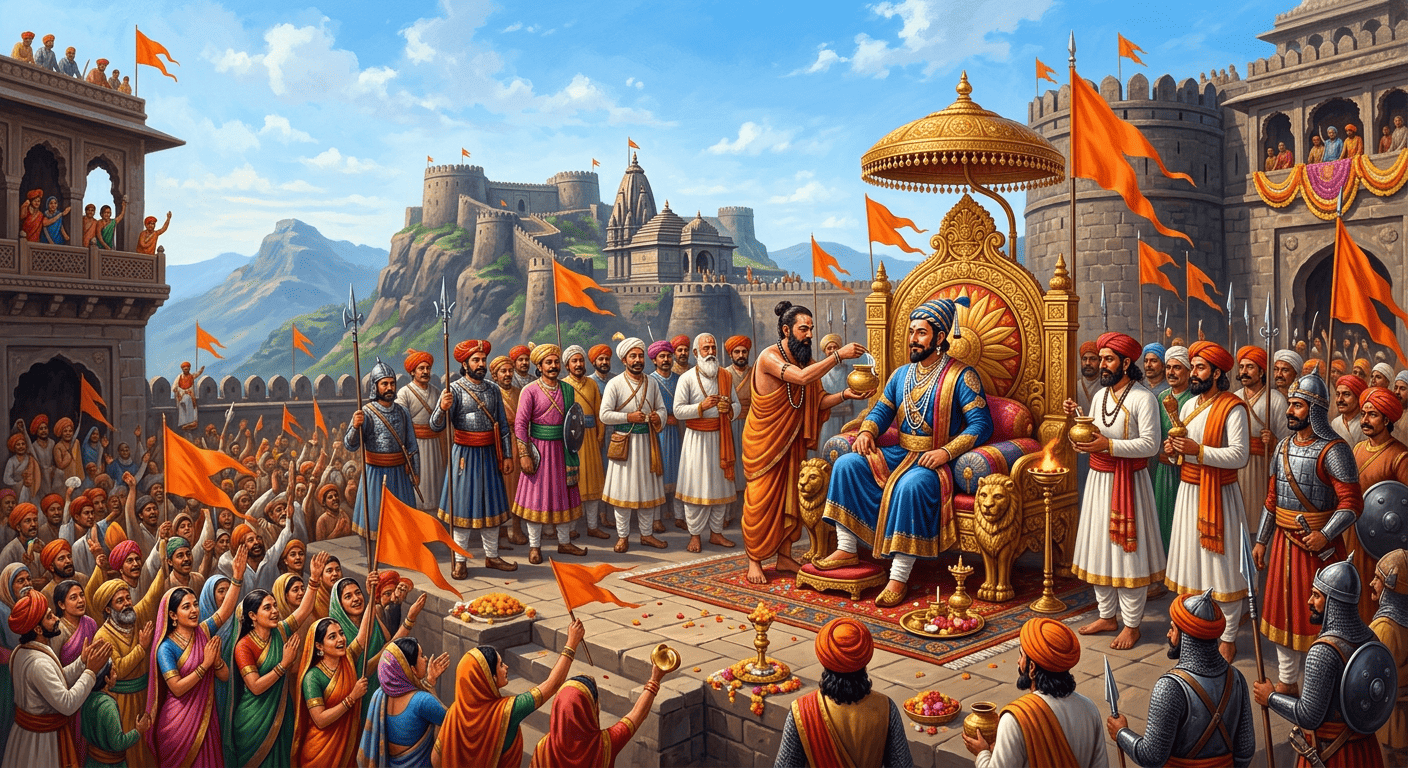
On June 6, 1674, at Raigad Fort, a historic coronation changed the course of Indian history. Chhatrapati Shivaji Maharaj was crowned as the sovereign king, establishing Hindavi Swarajya—a rule rooted in indigenous civilization, self-respect, and protection of dharma. This day, celebrated as Shivrajyabhishek Day, marks not merely a political event but the triumph of a civilization that had resisted foreign domination for eight centuries.
The Beginning of Foreign Invasion
The story begins in 712 CE when Arab forces invaded Sindh. Despite the extraordinary courage displayed by Raja Dahir's son and queens, Sindh and Multan fell to Muslim conquest by 713 CE. However, this initial foothold took seven decades of relentless Arab effort to secure. Resistance by Nagabhata I Pratihara and Avanijanashraya Pulakesin Chalukya stopped the victory march of marauding Arab armies, destroying their forces so completely that Arabs lost all regions they had conquered over the years.
The Somnath Trauma: 1025 CE
The year 1025 CE marked a dark turning point. Mahmud Ghaznavi, from a small state in present-day Afghanistan, launched a brutal attack on the Somnath Temple—one of the 12 Jyotirlingas and Shiva's most sacred site. This temple, famous for its immense wealth and architecture, became the target for displaying Islamic power. Mahmud's army of 90,000 soldiers included 30,000 unpaid volunteers attracted only by plunder. After three days of fierce battle, approximately 50,000 defenders and local civilians were killed. The temple was looted of 2 crore dinars in property, carried away on thousands of camels and oxen. More than 100,000 Hindus were enslaved and sold in Central Asian markets, causing prices to drop due to oversupply. Mahmud broke the temple's main idol, sending fragments to Ghazni, Mecca, and Medina. These pieces decorated Ghazni's mosques and palace entrances. The Baghdad Caliph honored Mahmud as "Yamin-ud-Dawla" (Right Hand of the Empire) and "Amin-ul-Millat" (Protector of the Faith), emboldening other Muslim rulers.
Systematic Temple Destruction
Historian Will Durant wrote: "The Mohammedan conquest of India is probably the bloodiest story in history". According to research by Sitaram Goel and colleagues in "Hindu Temples: What Happened to Them," six Muslim rulers destroyed 15,212 recorded temples—Mahmud Ghaznavi alone destroyed 1,000 temples in Mathura and 10,000 around Kannauj. Over 1,100 years, 61 kings, 63 military commanders, and 14 Sufis destroyed temples at 154 locations. Where temples stood, mosques, madrasas, and khanqahs were built using temple materials. Kutubuddin Aibak used elephants to demolish 1,000 temples in Delhi. Muhammad Gauri destroyed 1,000 temples in Varanasi.
Heroic Hindu Resistance
Despite political fragmentation, Hindu resistance never ceased. After Raja Suheldev's victory over Ghazni's nephew Masud in 1033, Islamic invaders didn't set foot in Bharat for the next one and a half centuries. The Cholas firmly controlled the South, extending Hindu rule to Ceylon and Southeast Asia. Kakatiya ruler Prataparudra II routed Alauddin Khalji's Muslim armies during their first attempt to capture Warangal in 1302-1303 CE. By 1335, Hindu power revived in the South. The Vijayanagara Empire played a prominent role alongside Mughals from 1526-1707 CE. The Jats emerged as major resisters against Islamic rulers. The Sarv Khap (All Khap) headquarters at Shoram, District Muzaffarnagar in Western Uttar Pradesh, defeated Ghazni, Timur, Ghori, and the Khiljis time and again.
Shivaji Maharaj: The Architect of Swarajya
By the 17th century, the Marathas rose to prominence coinciding with Mughal decline. Chhatrapati Shivaji Maharaj's vision was Hindavi Swarajya—self-rule by the people, for the people. The coronation took place on the 13th day (trayodashi) of the first fortnight of Jyeshtha month, June 6, 1674, at Raigad Fort. The ceremony was conducted according to shastras by Vishweshwar (Gaga Bhatta) of Varanasi, who knew all four Vedas, six philosophies, and all Hindu scriptures. Over 1,000 Brahmins along with their families from different corners of the Maratha State were invited, along with representatives from European trading companies. Shivaji sat on a 32-man golden throne weighing approximately 1.280 tons. Gaga Bhatt held the golden umbrella over Shivaji's head and conferred the title "Kshatriya Kulavantas Chhatrapati Raje Shivaji". The coronation challenged Mughal authority—unlike other rulers whose coronations required Mughal approval, Shivaji declared himself independent king. The coronation marked the beginning of a new era known as "Shiv Rajyabhisheka Shaka" for calculating time. His Rajyabhishek was not just a king's coronation but the triumph of self-respect, culture, and civilizational pride.
The Legacy Continues
The myth of 800 years of Islamic rule over Bharat originates from Muslim domination over Urdu-speaking areas (Delhi and adjoining regions). Effectively, Muslim rule extended over most of Bharat only during the Mughal period from Akbar to Aurangzeb—merely 151 years. Even during this period, Marathas and Vijayanagara kingdoms maintained independent principalities. KM Munshi observed about 1000-1300 CE: "Except within areas where Turkish armies operated, the India of the age belonged to the heroes of the resistance. Outside this area lay large parts of North India and the whole of the South—in fact three-fourths of the country where India followed its unbroken way of life". The Birla Temple's inauguration in Delhi in 1936 marked a significant chapter, it was the first Hindu temple built in Delhi after many centuries. Hindus had become so depressed by massive temple destruction that they almost stopped building new places of worship.
Civilizational Pride and Self-Respect
Shivrajyabhishek Day reminds us that despite centuries of foreign invasion, temple destruction, and forced conversions, Hindu civilization never surrendered. The resistance by Rajputs, Jats, Marathas, Sikhs, and the Vijayanagara Empire ensured Islamic invaders could never overrun the whole of Bharat as they did in other nations. Today, Shivrajyabhishek Sohala is celebrated at Raigad Fort with palkhi and puja, Shivaji-era martial arts exhibitions, Malkhamb, and other sports activities organized by the Akhil Bhartiy Shiv Rajyabhishek Samiti. The coronation of Chhatrapati Shivaji Maharaj formally declared an independent king, gratifying every Hindu heart harassed and oppressed by Muslim governments and clerics drawing authority from teachings alien to India's culture. This day represents valor, sovereignty, and pride—a moment that ignited the spirit of a nation and still inspires generations. The true history reveals not conquest but resistance; not submission but sovereignty; not defeat but the enduring strength of a civilization that refused to die.



Comments
Add new comment