Body
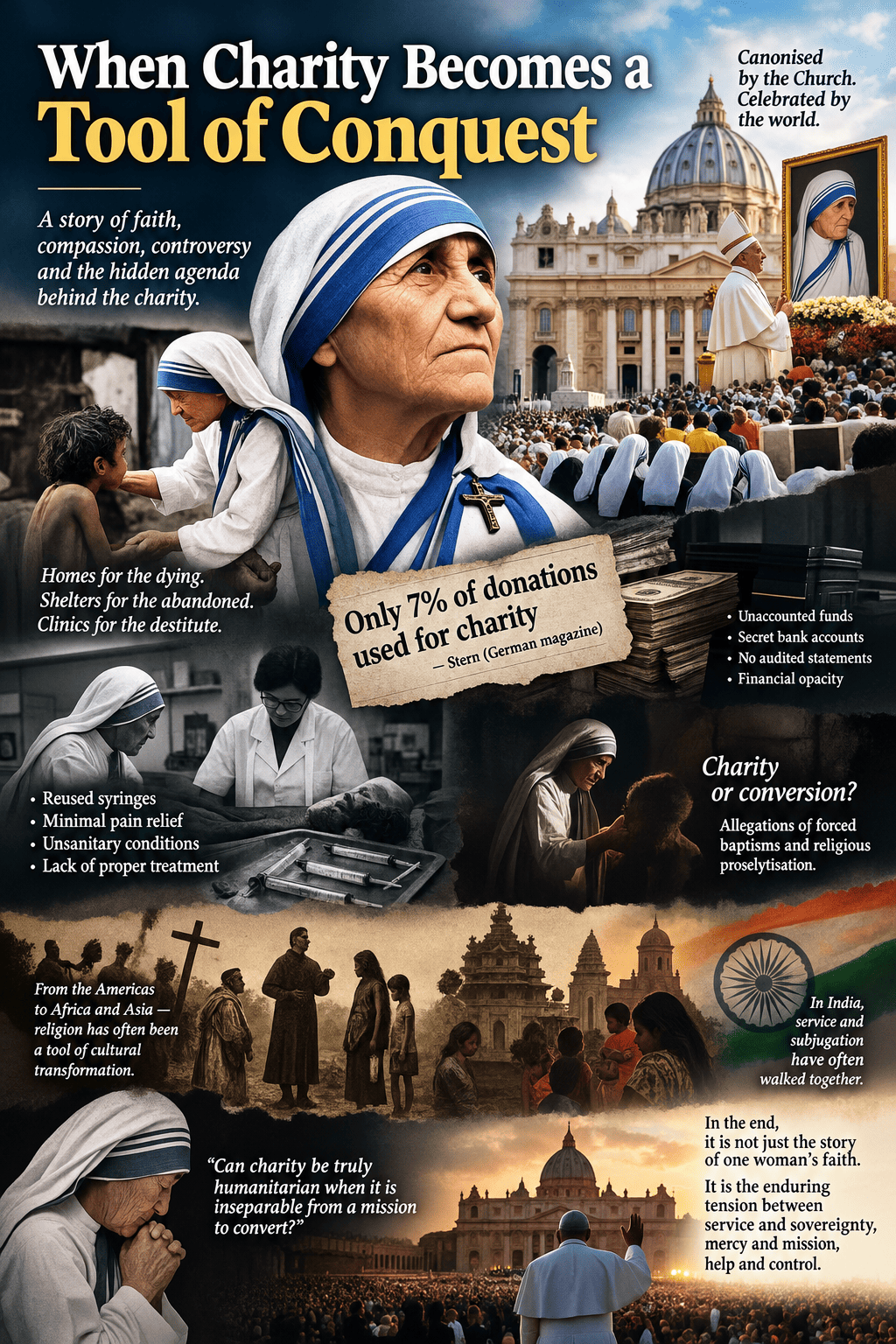
On 4 September 2016, in the grandeur of St. Peter's Square, Pope Francis elevated Agnes Gonxha Bojaxhiu to the highest honour the Catholic Church can bestow. She became Saint Teresa of Calcutta, canonised before a crowd of tens of thousands, including 1,500 homeless people seated in places of honour. The ceremony was a triumph of faith, a celebration of mercy, and a powerful reminder of the Church's enduring global influence. But behind the saintly image lies a more complicated story—one that raises uncomfortable questions about the relationship between charity, conversion and cultural sovereignty. For critics, Mother Teresa's legacy represents not simply compassion for the poor, but a systematic strategy of religious expansion that used humanitarian work as a vehicle for spiritual conquest.
The pattern has deep historical roots. Wherever the Church established power, it brought both service and subjugation. In regions where it held political authority, it exercised control through law and force. Where it lacked such power, it operated through hospitals, orphanages and shelters—extending a hand that often came with an unspoken condition: accept our faith, or at least accept our definition of salvation. Mother Teresa's Missionaries of Charity followed this model with remarkable effectiveness. They established homes for the dying, shelters for abandoned children and clinics for the destitute across India and beyond. Millions of dollars in donations flowed into their coffers. Yet investigations revealed troubling patterns. A German magazine, Stern, reported that only 7% of donations were actually used for charity. The remainder was funneled into secret bank accounts or used to build more missions. The Missionaries of Charity never issued audited financial statements in India, despite legal requirements, while comparable Hindu organisations like the Ramakrishna Mission regularly submitted transparent accounts. More serious allegations concerned the quality of care provided. Medical professionals who visited Mother Teresa's facilities reported reused syringes, minimal pain relief, unsanitary conditions and a lack of systematic diagnosis or modern medical treatment. A Canadian academic study found that her clinics received millions in donations but lacked necessary nutrition, adequate analgesics and proper medical infrastructure for those in agony.
The explanation offered by defenders was that Mother Teresa saw suffering as spiritually redemptive. She opposed abortion, contraception and family planning on doctrinal grounds, and she extended this philosophy to medical care. Pain was not something to be eliminated, but something to be endured as a path to God. For believers, this was holy acceptance. For critics, it was medical negligence justified by theology. The most explosive charge was that the Missionaries of Charity used their position to convert vulnerable people. Hindu nationalist leaders, including Mohan Bhagwat of the Rashtriya Swayamsevak Sangh, alleged that Mother Teresa's objective was to convert those being served into Christians. Critics claimed that her followers surreptitiously baptised the dying without their knowledge or consent—a practice described as harvesting souls rather than saving lives. These allegations struck at the heart of India's secular identity. In a nation where religious conversion has long been a sensitive political issue, the suggestion that charitable work was a cover for proselytisation touched deep anxieties about cultural preservation. For many Hindus, the sight of foreign-funded missionaries operating freely in India while indigenous traditions faced scrutiny felt like a continuation of colonial-era religious imperialism.
When Pope Francis canonised Mother Teresa in 2016, these criticisms resurfaced with renewed intensity. The Vatican declared that she had performed miracles—two healings attributed to her intercession after her death. One involved an Indian woman, Monica Besra, whose abdominal tumour allegedly vanished after prayers to Mother Teresa. Medical professionals countered that her recovery was due to modern medicine, not divine intervention. Critics described the canonisation process as superstitious, comparing it to black magic rather than legitimate spiritual recognition. The ceremony itself was a masterclass in symbolic politics. Pope Francis shamed world leaders for creating the crime of poverty while honouring a woman whose order had been accused of financial opacity and inadequate care. He seated the homeless in places of honour while the Church continued to accumulate wealth and property. The message was clear: the Church alone understands mercy, and the Church alone has the authority to define holiness.
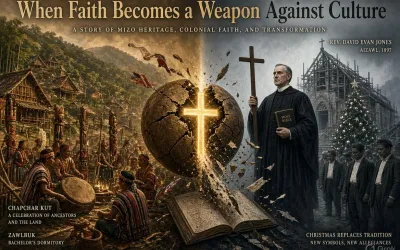
Mother Teresa's story fits a larger historical pattern. From the Spanish conquest of the Americas to the colonial missions of Africa and Asia, religious institutions have often operated as instruments of cultural transformation. They brought education and medicine, yes, but they also brought a worldview that positioned indigenous traditions as inferior, pagan or demonic. Conversion was framed as liberation, but it was also dispossession—the surrender of ancestral identity in exchange for spiritual membership in a foreign hierarchy. In India, this dynamic has always been politically charged. The country's constitutional commitment to secularism exists in tension with the reality of aggressive missionary activity funded from abroad. When religious organisations operate hospitals and schools, they gain influence over the communities they serve. When they tie that service to conversion, they create dependencies that can undermine cultural autonomy. Defenders of Mother Teresa argue that her critics exaggerate her flaws and ignore her genuine compassion. They point to her periodic hospitalisations as evidence that she did not impose her views on others. They note that many who benefited from her work speak gratefully of the care they received. They argue that her opposition to abortion and contraception was consistent moral conviction, not cultural imperialism. Yet the fundamental question remains unanswered: can charitable work be truly humanitarian when it is inseparable from a mission to convert? When a dying person is baptised without clear consent, is that compassion or coercion? When donations are diverted to build more missions rather than improve medical care, is that stewardship or deception?
The canonisation of Mother Teresa did not resolve these questions. It elevated them. By declaring her a saint, the Catholic Church affirmed that her methods were holy, her priorities were righteous and her legacy was beyond reproach. For believers, this was a moment of triumph. For those who see missionary charity as a form of soft conquest, it was a reminder that the Church continues to wield power—not through armies or laws, but through the moral authority of those who serve the poor while seeking to save their souls. In the end, the story of Mother Teresa is not simply about one woman's faith. It is about the enduring tension between service and sovereignty, between mercy and mission, between the genuine desire to help and the institutional imperative to expand. Where charity becomes a tool of conversion, the line between compassion and conquest grows dangerously thin.


Comments
Add new comment