Body
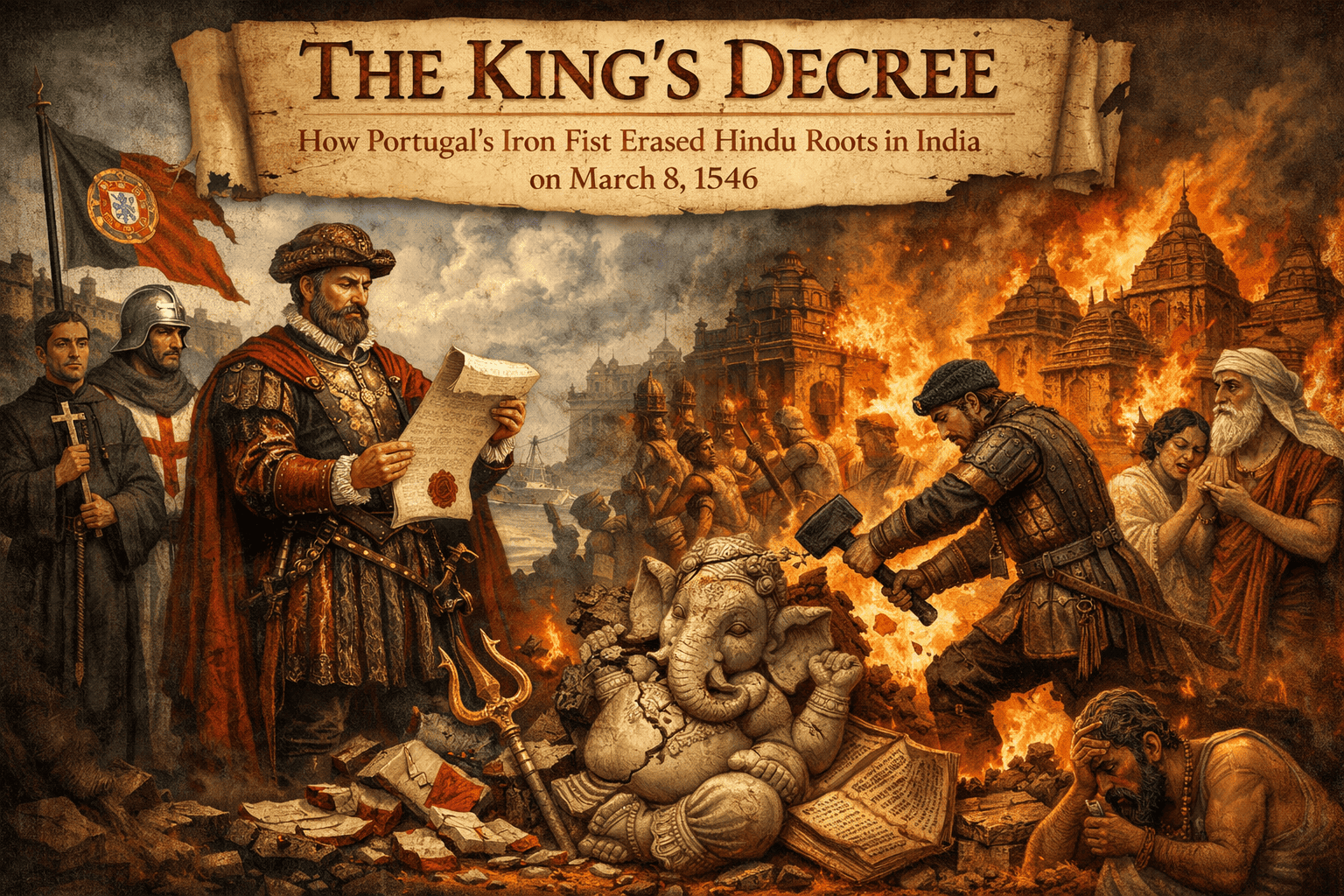
In the sweltering coastal enclaves of India, where ancient rituals intertwined with the rhythms of monsoon and harvest, a royal command from across the seas shattered centuries of unbroken tradition. On March 8, 1546, King João III of Portugal issued a sweeping order to his viceroys and governors in the Indian possessions—Goa, Daman, Diu, and beyond. This decree, born from fervent missionary zeal and imperial ambition, forbade the practice of Hinduism outright. Hindu temples were to be razed to the ground, public celebrations of sacred festivals banned, priests expelled from the land, and anyone daring to craft or possess Hindu images subjected to severe punishment. What followed was not mere policy enforcement but a calculated uprooting of local lifeways, replacing them with an alien faith and worldview.
This was no isolated edict. It capped years of escalating pressure. Portugal had seized Goa in 1510 under Afonso de Albuquerque, establishing a foothold that blended trade, conquest, and conversion. By the 1540s, Jesuit missionaries like Francis Xavier—canonized saint and relentless evangelist—lobbied the crown for drastic measures. Xavier's letters to João III painted Hindus as idol-worshippers ensnared by superstition, urging the king to wield state power as a divine sword. The 1546 order was the blade's descent: "All temples shall be completely destroyed," it proclaimed, commanding officials to "forbid the public celebration of their feasts" and "expel all Brahmins" who performed rituals. Idols were to be smashed, and their fragments scattered or burned. Violators faced lashes, exile, or death.
The impact rippled through Goan society like a tidal wave. Temples, those pulsating hearts of village life, housed not just deities but communal memory—sites for weddings, harvests, and ancestral veneration. The Shree Mahalaxmi Temple in Panaji, the Mangueshi Temple in Priol, and hundreds more fell under the hammer. Eyewitness accounts from Portuguese chroniclers like Diogo do Couto describe demolition crews toppling spires amid the wails of gathered locals. Priests, the custodians of Vedic chants and yajnas, were hunted down; many fled inland to Vijayanagara or the Deccan sultanates, carrying sacred texts on their backs. Festivals like Ganesh Chaturthi or Diwali, which once lit up the nights with lamps and processions, went underground, reduced to furtive home altars.
Punishments were brutal to instill fear. The decree mandated "severe penalties" for creating Hindu images—sculptors caught carving a simple murti faced the Inquisition's dungeons, where torture devices extracted confessions. One record from 1560 notes a fisherman flogged for possessing a clay Ganesha; another tells of a family exiled for whispering mantras. By 1567, a follow-up ordinance escalated this to the Goa Inquisition, a tribunal that tried over 16,000 cases in its first two centuries, disproportionately targeting Hindus who clung to their rites. Converts, often coerced through taxes or threats, were monitored for backsliding; a "relapse" meant property seizure.
This assault on tradition was total war on identity. Hinduism in 16th-century Goa wasn't abstract theology but lived culture: the tilak on a forehead, the sacred thread across a chest, the vermilion in a bride's parting. The Portuguese viewed these as abominations, demonic hurdles to salvation. Xavier himself wrote in 1545, imploring João III: "If there is no remedy, Your Highness should order all principal Hindus to be expelled... and prohibit them from entering the country." The king's response was the 1546 decree, enforcing a cultural purge that echoed Roman edicts against early Christians—but inverted, with the colonizer as inquisitor.
Resistance simmered, though overt rebellion was crushed. Local leaders, or gaonkars, petitioned viceroys, arguing temples were economic hubs sustaining artisans and pilgrims. Some hid idols in wells or forests, smuggling priests back under cover of night. Underground networks preserved oral traditions, Sanskrit slokas recited in whispers. Yet the decree's success was evident: by 1570, Goa’s Hindu population plummeted, with churches rising on temple foundations. The Sé Cathedral in Old Goa, a colossal monument to Portuguese dominance, stands today where sacred groves once thrived.
Why this ferocity? Portugal saw its Indian empire as a crusade extension. The 1534 Treaty of Zaragoza divided the world between Portugal and Spain, granting Lisbon Asia's conversion mandate. João III, pious and pragmatic, funded missions with spice trade riches. Missionaries framed Hinduism as barbaric—polytheism, caste, sati—ignoring its philosophical depth in Upanishads or Bhakti poetry. Temples weren't just spiritual; they symbolized sovereignty. Destroying them asserted that no rival authority could endure.
Fast-forward, and echoes persist. Post-1961, when India liberated Goa, survivors reclaimed spaces: the Mahalaxmi Temple was rebuilt, festivals revived. Artifacts unearthed from wells testify to resilience—bronze Natarajas, buried to evade the flames. Today, Goan Hindus honor March 8 not as defeat but vigilance, a reminder that traditions endure when fiercely guarded.
This episode underscores a timeless truth: cultures thrive when rooted, but falter under relentless uprooting. Portugal's decree didn't eradicate Hinduism—it drove it deeper, like roots piercing unyielding soil. In defending one's heritage against erasure, societies find strength. The 1546 order, meant to impose uniformity, instead immortalized the unyielding spirit of those who refused to forget.
Historical records affirm the decree's scope. Portuguese archives in Torre do Tombo hold the original parchment, translated in Gasper Corrêa's Lendas da India. Xavier's epistles, published in Epistolae S. Francisci Xaverii, reveal the ideological fervor. Modern scholars like Rowena Robinson in Conversion of Memory document the Inquisition's toll, estimating 90% of Goa's population converted or fled by 1600. These aren't myths; they're ledger entries of loss.
Yet resilience prevailed. Sahitya Akademi awardee Chandrakant Keni's novels draw from family lore of hidden puja. Anthropologist Michael Zabot notes in Everyday Life in Portuguese Goa how Catholic feasts absorbed Hindu motifs—Christmas lamps mimicking Deepavali. This syncretism, born of survival, enriches Goan identity today.
The lesson? When foreign powers decree a people's oblivion, they underestimate the human will to remember. João III's order uprooted temples, but not the faith etched in hearts. In India’s long arc—from Vedic seers to modern revival—such blows only temper the resolve to preserve what is eternal.



Comments
Add new comment