Body
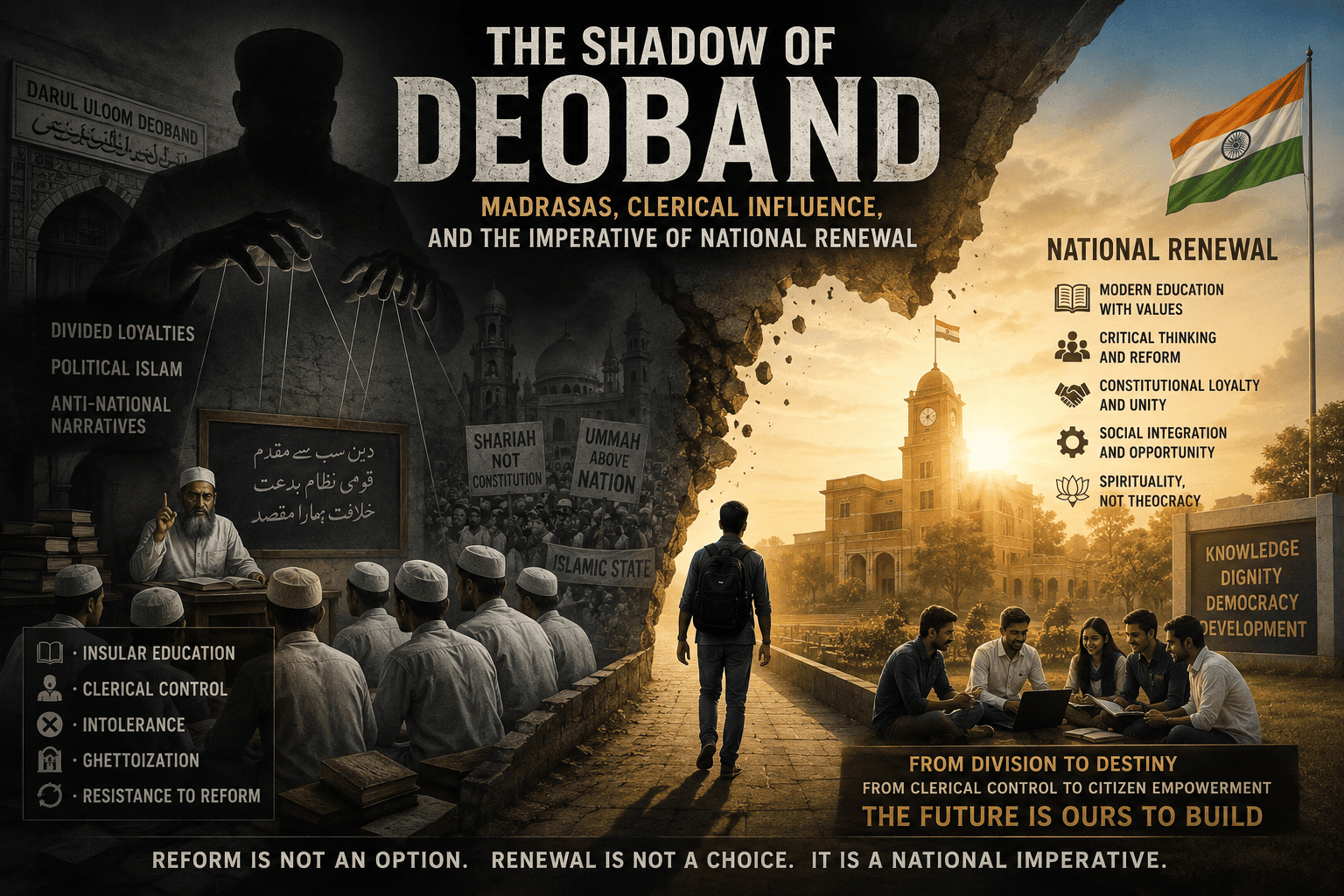
On 31 May 1866, in the quiet town of Deoband in Uttar Pradesh, a group of Islamic scholars led by figures like Muhammad Qasim Nanautawi established Darul Uloom Deoband. Born in the aftermath of the 1857 revolt against British rule, the seminary aimed to preserve and revive a strict interpretation of Islamic learning, emphasizing Quran, Hadith, and resistance to external influences. What began as an effort to safeguard religious identity amid colonial upheaval evolved into a vast network of madrasas across the subcontinent. Today, this legacy demands unflinching scrutiny—not through prejudice, but through a commitment to truth, national integrity, and the protection of India's civilizational ethos.
The founding of Darul Uloom reflected a worldview prioritizing scriptural purity and separation from prevailing cultural currents. Deobandi thought sought to "purify" Muslim practice by opposing folk traditions, shrine veneration, and syncretic elements that had developed over centuries of coexistence in the Indian landscape. This inward focus, while preserving certain theological traditions, fostered an ideological framework that often positioned Islamic identity in opposition to the pluralistic reality of Bharat. Over generations, this has translated into a parallel educational ecosystem that, in many instances, has distanced young minds from mainstream Indian society, its Constitution, and its shared heritage.
Critics rightly highlight systemic issues within numerous madrasas. Reports document inadequate modern education, leaving students ill-equipped for contemporary opportunities. Curricula centered heavily on religious texts frequently sideline science, mathematics, history, and civic education aligned with India's constitutional values. This isolation perpetuates cycles of economic dependence and social separation. Government bodies like the National Commission for Protection of Child Rights (NCPCR) have raised alarms, noting madrasas' failure to integrate children into mainstream schooling and recommending curbs on state funding where basic safeguards are absent.
More disturbing are accounts of malpractices and exploitation. Instances of corporal punishment, child labor, and sexual abuse in some Quranic schools have surfaced repeatedly. Vulnerable boys, often from poor families, endure environments lacking oversight, where authority figures wield unchecked power. Cases in places like Pune, Hyderabad, and Kerala underscore the vulnerability of children entrusted to these institutions. Such abuses betray the very moral teachings seminaries claim to uphold and demand rigorous accountability, including mandatory registration, transparent curricula, and child protection protocols.
Funding patterns raise further questions about foreign influence and ideological alignment. Many madrasas rely on donations from abroad, sometimes linked to puritanical strains that amplify separatism. In the broader Deobandi ecosystem, especially across borders in Pakistan and Afghanistan, the ideology has been associated with radical offshoots. The Taliban's roots trace back to Deobandi seminaries, where a rigid interpretation merged with political militancy. While Indian Deobandi institutions often project moderation, the ideological DNA—emphasizing supremacy of Sharia, rejection of "innovations," and historical grievances—has fueled challenges to national cohesion. Links to extremism, though debated, appear in investigations of terror networks drawing recruits from unregulated madrasas.
This is not an indictment of every Muslim learner or all religious education. Millions of madrasa students seek genuine knowledge, and many Muslim families increasingly prefer mainstream schooling. Yet, the unchecked proliferation of institutions resistant to reform poses a cultural and security challenge. Clerical influence—often termed the mullah network—extends beyond classrooms into society, shaping narratives that prioritize ummah over nation. Fatwas, sermons, and community pressures sometimes discourage integration, interfaith harmony, or loyalty to India's plural ethos. Historical Deobandi opposition to certain cultural practices mirrors contemporary frictions, where assertions of religious exclusivity clash with the Indian ideal of "Vasudhaiva Kutumbakam" tempered by national self-assertion.
India's right to self-preservation as a civilizational state requires addressing these fault lines. A nation built on ancient wisdom, resilience through invasions, and modern democratic resurgence cannot afford educational silos that breed alienation. True reform means madrasas adopting comprehensive curricula—blending religious instruction with constitutional values, vocational skills, and scientific temper. Regulatory oversight, ending opaque foreign funding, and promoting transparency serve the interests of Muslim youth themselves, empowering them as proud contributors to India's growth rather than marginalized outliers.
The 1866 founding occurred when Muslim reformers grappled with decline and sought revival through isolation and orthodoxy. In 21st-century India, rising as a confident power, the response must differ: integration without erasure, reform without coercion. Voices advocating for modernization within the community deserve amplification. Exposing malpractices—whether financial opacity, ideological indoctrination, or abuse—is an act of service to society, safeguarding children and upholding equality before law.
National renewal demands courage to confront uncomfortable realities. The Deoband legacy, while historically significant, highlights the perils of unbridled clerical authority and parallel systems. By prioritizing education that fosters unity, critical thinking, and love for the motherland, India can ensure every child, regardless of faith, becomes a builder of a strong, harmonious Bharat. This is not division but discernment—the discernment needed to preserve diversity within the framework of one nation, one Constitution, and one shared future.





Comments
Add new comment