Body
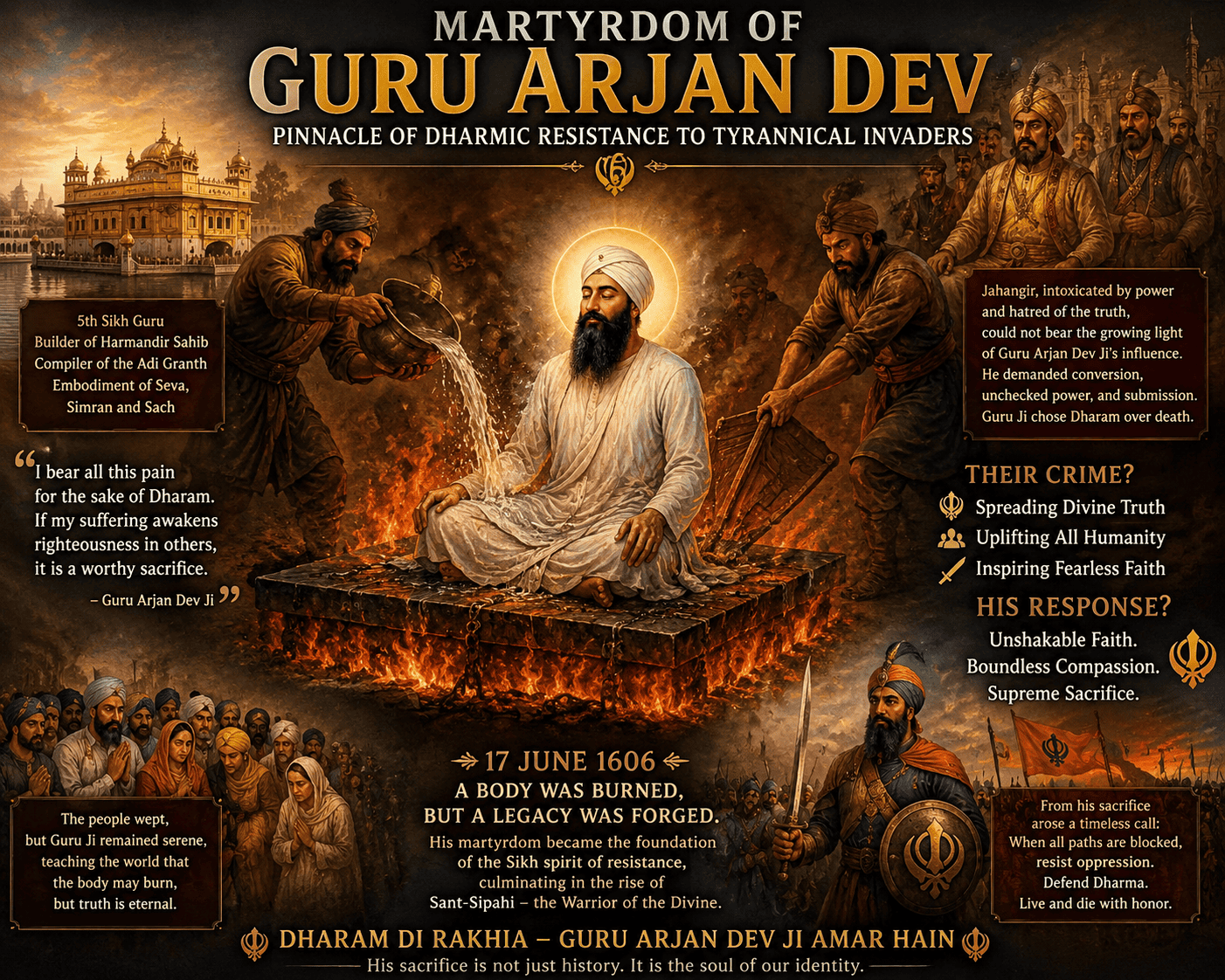
The martyrdom of Guru Arjan Dev on 30 May 1606 stands as a defining moment in the unyielding defense of faith against Mughal oppression. Arrested on orders from Emperor Jahangir, the fifth Sikh Guru endured brutal tortures rather than renounce his beliefs or convert to Islam, inspiring generations to safeguard their spiritual heritage.
Guru Arjan's Life and Achievements
Guru Arjan Dev ascended as the fifth Sikh Guru in 1581 after his father, Guru Ram Das. He compiled the Adi Granth, the precursor to the Guru Granth Sahib, incorporating hymns from previous Gurus, Hindu bhagats, and Muslim saints, creating a unifying scripture that transcended divisions. He expanded Amritsar into a thriving Sikh center, completing the Harmandir Sahib and establishing towns like Tarn Taran and Kartarpur. Through the dasvandh system, he fostered community welfare via gurdwaras and langars, strengthening the Sikh panth amid rising Mughal scrutiny. His compositions, including the Sukhmani Sahib, emphasized devotion, equality, and resilience, drawing followers from diverse backgrounds and alarming imperial authorities.
Arrest and Demands of Conversion
In May 1606, Jahangir ordered Guru Arjan's arrest in Lahore, suspecting him of aiding Prince Khusrau in a rebellion. The emperor demanded a 200,000-rupee fine, alterations to the Adi Granth, and conversion to Islam—demands the Guru firmly rejected. Jahangir's autobiography, Tuzk-e-Jahangiri, reveals his disdain: he viewed the Guru as a heretic captivating Hindus and Muslims alike, ordering his elimination to curb Sikh influence. This event marked the first martyrdom of a Sikh Guru, signaling Mughal intolerance toward independent faiths challenging Islamic dominance.
Five Days of Inhuman Torture
The tortures unfolded methodically over five days in Lahore Fort. On day one, the Guru was denied food, water, and sleep, yet he chanted Waheguru immersed in simran. Day two saw him seated in a copper cauldron filled with boiling water, his flesh scalding as he remained serene, accepting divine will. Hot sand poured over his body on day three burned from above while boiling water seared below; day four involved a red-hot iron plate with more scalding sand. Throughout, Guru Arjan neither cried nor showed anger, embodying fearless devotion. On day five, permitted a bath in the Ravi River, his blister-covered body merged into light, vanishing before witnesses—his ultimate sacrifice witnessed by thousands.
Immediate Impact and Guru Hargobind's Response
Guru Arjan's final words to his son Hargobind urged arming against tyranny: "This calms my doubts about the hereafter, but I am concerned about the future of the Sikhs." Hargobind heeded this, donning two swords—mir i (authority) and piri (temporal power)—and militarizing the panth. He fought multiple battles against Mughals, winning victories that preserved Sikh autonomy. This shift transformed Sikhs from pacifists into warriors, directly countering Mughal aggression and protecting Punjab's dharma.
Glorious Tradition of Dharmic Resistance
Guru Arjan's martyrdom was no isolated event but part of a millennium-long Hindu-Sikh defiance against invaders seeking forced conversions and temple destructions. From early Arab incursions repelled by Sindh rajas to Rajput kings like Prithviraj Chauhan halting Ghurids for 150 years, natives repeatedly thwarted conquests. Cholas under Rajendra crushed Islamic threats in the south; Vijayanagara's Krishna Deva Raya humbled Bahmanis. Maharana Pratap's eternal guerrilla war against Akbar exemplified unbowed spirit. Sikhs extended this legacy: Guru Tegh Bahadur's 1675 beheading by Aurangzeb defended Kashmiri Hindus from conversion, while Guru Gobind Singh's 1699 Khalsa formation birthed saint-soldiers who bled Mughals dry, slaying governors and weakening the empire.reonline. Shivaji's resurgence, Jat revolts under Churaman, and Sikh misls collectively dismantled Mughal rule, reclaiming Bharat from alien tyranny.
Enduring Legacy of Martyrdom
Guru Arjan's sacrifice ignited the Sikh martial tradition, fostering unity with Hindus against shared persecution. Celebrated as Shaheedi Divas, it reminds that dharma triumphs through courage, not submission. This heritage fueled freedom struggles, from Banda Bahadur's uprisings to 1947 defenses in Punjab. Today, it inspires vigilance against any erosion of ancestral faiths. In refusing conversion, enduring flames and floods, Guru Arjan exemplified the eternal vow: protect the sacred land and its timeless values at all costs. His light endures, guiding the nation.








Comments
Add new comment